Tweets by ProFouad1 Career and Jobs

Saturday, February 11, 2017

Caregiver

Among the health personnel, the caregiver is probably the closest to the hospitalized. To care for his patients, he ensures their hygiene and comfort. Under the responsibility of the nurse, he contributes to the care of the patients.


Resultado de imagem para caregiver


On a daily basis, he helps patients to dress and in their toilet. Some patients must remain fasting before an operation, others follow a special diet... The caregiver checks the instructions before preparing the food trolleys.

The closest to the patient


He accompanies on their journeys, deprived persons of autonomy. He helps them sit down, feed themselves, get out of bed. His work extends to some common maintenance tasks such as cleaning and storing rooms, changing bedding and linen.

Limited care


Unlike a nurse, the caregiver can not give medication or medical attention. Nuances sometimes subtle. He is not intended to install an infusion or to take the tension of a patient, but can change bandage, take care of temperature measurement or check the weight curve.

Skills required


- Physical and nervous resistance
- Patience and tact
- Adaptability

Curriculum / training


To become a caregiver, you must hold the state health care aide diploma. There is a competition for entry to training, organized in schools approved by the Ministry of Health.

On the program: anatomy, physiology and mathematics.

Employment / Outlets


It is a largely female-dominated activity. They are found in old people's homes, in the homes of elderly people deprived of autonomy and especially in all hospital departments.

As with other health workers, high availability is required. To ensure the care, by rotation, certain nights, weekends and holidays included, is part of their constraints.

The profession of caregiver is doing well: thousands positions are offered each year, in particular for seniors.

Professional evolution


A bridge is possible to obtain the state diploma of childcare auxiliary.

After some years of practice in the hospital or medico-social sector, the caregiver can go to the Nursing Institute selection tests in order to prepare for the State Diploma of nursing.

Doctor

Preserving life, caring for body and mind, treating diseases and pathologies, relieving suffering, is the daily life of the general or specialist practitioner.

The Daily of Doctor


Resultado de imagem para practitioner.


The doctor welcomes patients of all ages and treats various pathologies. This requires a great deal of medical knowledge.

The general practitioner has a complete vision of his patients. He knows them, knows their habits, their lifestyle, their family history, and so on. This allows an effective follow-up and a better understanding of their illnesses, their pathologies... He regularly carries out health check-ups, tests, checks if the vaccines are up to date: the life and health status of his patients are his priorities. Prevention is also part of his functions.

Skills required to become a doctor


- Proficiency in medical terminology
- Patience, organization and availability
- Respect for professional secrecy and good practices
- Good personal balance
- Sense of observation, listening and empathic skills

Where does the doctor work?


The aging of the population and the multiple retirements generate employment prospects. There is a real shortage of doctors, this represents a pool of jobs for future health specialists. The majority of doctors have their own office, either alone or with others, but they can also practice their profession as an employee in a hospital, in the health services of the army, in humanitarian associations, in universe of non-curative care as a school doctor or occupational practitioner, for example. Doctors in non-curative care can not prescribe treatments. Before beginning his career, the doctor must register with the Council of the Doctors Order. This is a mandatory and very important step.

Professional evolution


General practitioners can move into the field of public health control medicine or into the prevention sector: occupational doctors, school doctors, etc.

Friday, February 10, 2017

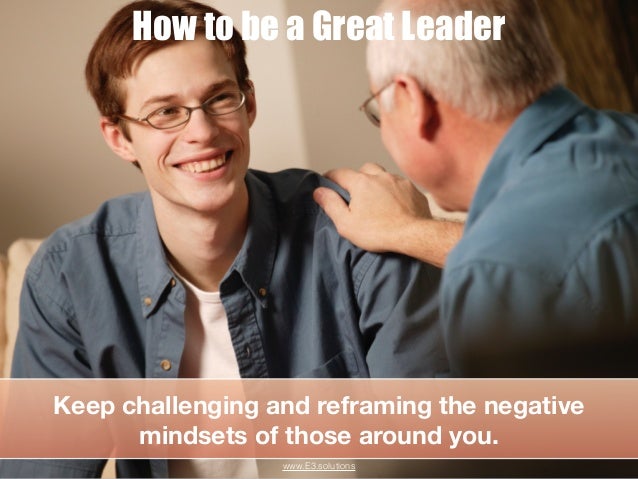
Reframing a Collaborator

Reframing a collaborator is a delicate exercise.

Before reframing an employee, you must know how to lead a team, it is the role of a good manager.


Resultado de imagem para Reframing an employee

Why reframing a collaborator?


Your collaborator does not give you satisfaction, it is less effective and less efficient. You feel him demotivated, he has difficulty to respect the instructions you have given him and he no longer has a good behavior at work (aggressive, is always late, no longer respects the deadlines, too weak results, etc.). So you are going to act while there is still time.

Your main goal is to establish your authority so as not to create a precedent within your team.

Reframing a collaborator is a delicate exercise that requires a lot of diplomacy to avoid a conflict that could persist over time.

How to reframe a collaborator?


What is essential, is to avoid the ostrich policy and postpone what could be done today or in the very short term, because the situation will deteriorate and the negative remarks of the manager against his collaborator, will accumulate.

That is why a reframing interview is essential.

Reframing maintenance


The reframing maintenance consists in making aware of the problem to the managed and to find solutions with him.

However, reframing maintenance will not be performed hot, the most appropriate time will be when the subordinate is most receptive.

On the other hand, if a slip occurred before witnesses, it is advisable to intervene immediately to mark the spirits.

The reframing maintenance will take place in several phases:

* Prepare for the interview with your ideas:

- The consequences of skidding,
- The reproaches you wish to make,
- facts.

* Expose what you expect from him:

- be precise and intelligible in your approach to make you understand,
- ask him to find solutions to make him accountable.

* Listen to the collaborator to find out:

- at first, if he understood what you are asking him and what you are expecting from him.
- in a second step, you can listen to his different proposals. If they are not suitable for you and if they are inadequate, ask him to make other suggestions for your work.

The role of manager


During the interview, the manager must stand firm without making a crisis of authority.

It is therefore necessary to find the right balance to "break the abscess". As a result, the manager will react to the slippages of managed by putting him back on the right path while preserving good relations.

Avoid an aggressive tone, undertones, generalizations. Invite the managed to collaborate.

The situation is at an impasse


You met your collaborator during a reframing interview, however the latter did not take into account your requests and suggestions.

In this case, it will be advisable to recall the rules of the company and to harden the tone by threatening him with sanctions. His behavior must not interfere with the proper functioning of the team.

It is sometimes necessary to make an example so that everyone understands who is the manager.

As a last resort, it will be useful to use the HRD to take appropriate action.

However, do not forget that any employee is entitled to error, especially if:

* You have overloaded him with work,

* You asked him to have very flexible schedules,

* Or if you have given him several functions.

School Teacher

School teacher in kindergarten and primary, has the heavy burden to educate children from 2 to 10 years. A true vocation.

The daily missions of the school teacher


Resultado de imagem para School Teacher

In kindergarten, the mission of the school teacher is to prepare children for entry into primary school. Enlightenment activities, group life learning, reading and numeracy awareness occupy most of the school time. It plays an essential role in the emotional and intellectual development of students. And it is mainly through various activities that reinforces the learning of language, socialization, cultural and physical development of children.

Versatile, patient, educator


In primary school, teachers must be very versatile because they teach no less than seven subjects, taught to children of 6 to 10 years old, often agitated or even turbulent: reading, writing, math, history-geography, living language, sport...

The weekly service of schools teacher is 26 hours of instruction in front of the students, plus one hour of consultation in pedagogical team.

Apart from his time at school, he must also correct the course-and-work books, prepare future lessons and receive the parents.

Skills required to exercise this position


- Good physical and nervous resistance
- Pedagogical meaning
- Rigor and Method
- Creativity, artistic sense

The positions and functions of school teachers


School teachers are recruited in public and private schools as well as in parallel educational structures.

Professional evolution


With experience, the schools teacher can be destined to the training and the supervision of other teachers. He can also go to specialized education with further training, or alternatively to the function of guidance counselor or school psychologist.

So depending on the country, he may at last, become a school director after some time of experience as a professor and then enter the examination contest after some years of service.

Thursday, February 9, 2017

Academic Administration Officer

An official attached to the Ministry of National and Higher Education and Research, the administration officer at the Ministry of National and Higher Education, also responsible for school and university administration and he is responsible for preparing and implementing administrative decisions.


administration officer


The missions of a school and university administrator


The mission of the Administrative Officer at the Ministry of National Education and Higher Education is to set up and implement the ministerial and interministerial public policies conceived by his administration as well as to supervise the administrative agents (secretaries, territorial editors, etc.). This official is above all a very good manager in charge of finance, equipment but also schooling, international exchanges. It also resolves issues of litigation.


Skills required to practice this occupation


- Very good knowledge of law and economics
- Very good manager
- Ease of writing
- Organization, rigor


Where does he work?


The Administrative Officer at the Ministry of National and Higher Education may work in an elementary school, college, high school or university. This post is not accessible to young graduates, the competition is open to civil servants and public officials who can demonstrate at least four years of public service and tenure.


Professional evolution


With a few years of experience, this professional can accede to the functions of administrator of the national education and the higher education and research.

Tuesday, January 31, 2017

Agriculture Jobs

With many outlets, it is preferable to be qualified to work in this sector. Discover all the agriculture jobs.

With a such annual output, the agricultural production (Cereals, livestock, viticulture, but also agronomy, agricultural equipment or management of the natural environment: the outlets are numerous and varied. Provided to be qualified.

Resultado de imagem para Agriculture Jobs

Rural development consultant, landscaping site manager, agro-equipment engineer: as many agricultural jobs seeking young graduates. Few economic sectors can boast to employ millions people in different jobs and recruit many employees and seasonal workers every year. Not to mention millions jobs in tourism, environment or catering, linked to the agricultural and rural world. Between tradition and modernity, agriculture digs its furrow and looks for the professionals of tomorrow.

Agricultural employment on all floors


It is far from the time when farmers were necessarily sons and grandsons of farmers. 

Today, many employees in the sector do not come from this sector. It is also noted that the number of women employees has increased significantly, accounting for a great percentage of farmers. Finally, the sector offers opportunities at all levels of training: from the certificate of professional aptitude for agriculture to engineering, through the agricultural baccalaureate and the senior technician certificate. In recent years, professional licenses have also met with increasing success. So many diplomas that prepare themselves for initial or alternating training, but always as close as possible to the needs of the sector.

Landscaping, agro-equipment: agricultural sectors that recruit


Little known to the general public, some sectors are nevertheless a major development and recruit massively. This is the case for the landscaping jobs: the number of companies has increased and created more jobs to meet the demands of communities, companies or individuals. Another dynamic sector: agro-equipment. The technicisation of agricultural machinery requires increasingly specialized skills in the design, manufacture, maintenance or sale of machinery.

Bio develops agricultural jobs


More and more consumers are looking for a healthier and greener diet. To meet this demand, many farmers are embarking on organic production: there are many of them every month trying out the adventure, not even enough to meet all the needs. This in turn leads to the development of certification, procurement and logistics professions, as well as advice to local and regional authorities, notably within the framework of health and food policies. So many jobs that are looking for varied profiles.

List of agriculture jobs


- Produce: aquaculturist, lumberjack, pruner, horticulturist, cellar master, silviculturist, nurseryman, landscape gardener, market gardener, livestock manager, cereal grower.

- Adviser: agro-development consultant, forest engineer, oenologist, forestry technician, agricultural lawyer, agricultural affairs officer, agricultural management consultant.

- Selling: technical-commercial in agroequipement, head of exploitation, director of production, head of breeding.

Thursday, January 19, 2017

Attitudes of People Who Make a Difference at Work


Some people may not realize their mistakes or do a good job at work. Employees often feel inadequate and discourage service because they feel incompetent.
Resultado de imagem para Attitudes of People Who Make a Difference at Work


It is very important that an employee does not despair when things do not work out as expected. Often a company's projects go awry, or some staff member is not able to act right because he has many personal problems. However, these failures can affect the person's performance in the office and this can make the work irrelevant or even completely dispensable.

To help solve this problem, here you are some attitudes of people that really make a difference and improve the work environment:

They are not content with the status quo


These people are always looking for new ways to solve problems and improve their lives, career or attitudes in the workplace. Instead of conforming to the situation, they are always looking for a better future, and this makes them innovate and stay ahead of others.

They ask good questions


Irrelevant questions are often overlooked in the workplace. So one way to stand out is to ask questions that promote curiosity and interest. Reflect on situations and try to see through multiple perspectives. Smart questions that seek to optimize time and improve results are always welcome.

They have patience


Getting stuck in the same routine is something common in today's business world. However, for people interested in building something lasting, mastery, patience, focus and dedication are needed, that is the key to success. So do not speed up the processes. Set aside time to invent, think, reflect and improve.

They think of others


Researchers state that good jobs are what your employees do, thinking about how to deliver a solution that will be positive for others. In fact, most good jobs begin with an employee caring for the needs of his colleagues. So do not try to simplify the processes and wants of the people around you. Instead, focus on the end consumer and on issues that really matter, such as creating something that makes a difference in people's lives.

They ask for feedback and advice


People who make a difference are not afraid to ask for directions and advice. They know that different points of view generate the best ideas and opportunities to improve and grow. Also, these people are not selfish with their ideas and do not mind asking for help.