Tweets by ProFouad1 Career and Jobs

Monday, July 24, 2017

Administrative Officer

Administrative officer works both in the administrations and in the large companies. He/she is the initiator and the conductor of a program of actions in a particular sector: communication, legal, economy...

Resultado de imagem para Administrative Officer

Daily life of an administrative officer


Administrative officer often works in the environmental field. In large companies for which the environment represents a major stake (energy, chemistry, agri-food...), we find a team of missionaries who gravitate to the turn of the director of the environment. 

Depending on their skills, they take on a specific area of ​​the company's environmental policy.

General or expert


Thus, the mission manager in technological risks will focus on the prevention of accidents related to the industrial process; the communications officer, for his part, will be responsible for disseminating an image of the company that respects the environment; the legal officer will ensure compliance with environmental regulations and will advise management in the case of environmental litigation.

Skills required to practice this occupation


- Developed relational and pedagogical sense

- Technical knowledge

- Ability to work as a team

- Creativity, initiative

Training to become an administrative officer


Environmental managers are most often graduates of an engineering school specializing in urban planning or land use planning. The public sector is more open to academics and scientists than the private sector.

Where does the administrative officer work?


Outside large companies, opportunities are being developed within institutional associations, regional environmental directorates, departmental directions of agriculture and forestry, and local authorities. Depending on the size of the structure, he plays the role of an expert or, on the contrary, a generalist.

Professional evolution


They can access management functions or become environmental managers in a company.

Telephone Training

A teacher on the other end. Telephone training is one of the 6 main courses offered in distance education with e-learning, correspondence training, videoconferencing, video training and blended learning.

Resultado de imagem para Telephone Training

To set up the telephone training, the student and the teacher give each other a regular appointment once or twice a week for a course. This support is mainly used to develop oral skills required by certain formations, such as that of modern languages.

Advantages of telephone training


The main benefits of telephone training include:

* No travel: neither the teacher nor the student needs to travel: telephone training is therefore economical in time and money.

* One-to-One: the teaching situation is one-to-one, which allows a precise response to the needs of the learner.

* A time frame: setting appointments can be seen as a constraint, but above all it provides a framework for learning.

Good to know: if you are taking language courses, telephone training is ideal for developing oral expression and comprehension skills.

Disadvantage of telephone training


Telephone training is one of the most costly distance training courses and increases the cost of the training since it is paid on time: around USD 46.56 per hour a course.

Sunday, July 23, 2017

The Right Tools to Find a Student Job

To find a student job, it is necessary to have the right tools: CV, printed cards and letter of motivation will be assets in your research.

Resultado de imagem para Find a Student Job

Write your resume


Take the time to write your resume. Even if you have never worked, you have elements, acquired skills to present. Doing this job to develop a resume will then allow you to fill out more quickly the "Jobs" sections of the sites that offer positions.

* Your education and your studies: diplomas, fields of study.

Tip: do not hesitate to note the interships or group works you have done, for example, a report on the homeless, the Facebook page of a neighborhood association...

* Your extra-curricular activities:

- in group (choir...) or in solo (reading...);
- sports (swimming, horse riding...).

Tip: specify the time spent in the activity, this shows your ability to invest.

* The languages ​​you speak, those you have only the basics.

* The trips you made, under what conditions.

* Your knowledge of computers:

- office automation, website, programming;
- operating systems - Windows Server 2003, Windows XP Pro, Unix, Linux.

* Indicate your professional experience: small jobs or work done in the family and friendly.

Example of small jobs done: repair of a room, restoration of furniture, sale in markets with a friend market gardener, babysitting,

* Note a few qualities that describe you (persevering, creative, attentive, punctual, curious...).

* Also indicate whether you have driving license or what means of transportation you have.

Good to know: write down everything that can describe you and show you off.

Print your professional cards


The professional card is a kind of mini-CV, which you can print in large business card format (1/4 page A4).

It must include several elements:

* Put your first and last name, your mobile number and your e-mail at the top right;

* Indicate, in title, what your objective is, what you are looking for;

Tip: you can have several professional cards, depending on the type of job you are looking for.

* Mention your main strengths in relation to your research;

* Summarize your CV in 3 sentences;

* End with a positive sentence such as "I am creative, rigorous...".

Good to know: this card is easier to distribute because less cumbersome than a CV. Deposit it at merchants, doctor, etc...

Prepare a cover letter


Write a cover letter stating your wish to work in parallel with your studies, a summer job or an event.

Explain what motivates you to:

* Have a professional activity;

* Accumulate experience;

* Pay your studies...

Be specific about your availability.

Distance Education at University: Where to find out?

At university, all degrees can be obtained by distance learning. University studies in attendance exemption are particularly aimed at working students, housewives, students in dual curriculum.

Resultado de imagem para Distance University

Distance Education at University: Sources of information:


* You can consult the universities' websites directly for more information. When universities are concerned, you will find a section on distance education.

* You can also find information on the sites specialized in distance education.

* You can go directly or call the head of the chosen department, depending on the subject you wish to study.

Some universities impose conditions for distance education at the university:

* To have previous professional experience in the field of education;

* Ability to demonstrate that distance learning, rather than face-to-face, is essential.

Cost of distance education at the university


The cost of distance education at university is set annually by ministerial order:

* Bachelor's degree: USD 214.60;

* Master's degree: USD 298.57;

* Doctorate degree: USD 456;

* Engineering degree: USD 711.43.

To these graduation fees may be added:

* Additional costs related to distance education;

* Additional fees for teaching modules voluntarily added to the initial diploma;

* Registration for Social Security (if you are not an employee);

* Enrollment in the university's preventive medicine department;

* Enrollment in the university sports service (at the student's choice).

Saturday, July 22, 2017

Successful Job Interview via Webcam

In the digital age, it will be more and more common for employers to offer a job interview via webcam, especially Skype. This approach has the advantage for both the employer and the employee to be able to meet anywhere - virtually speaking - avoiding travel. In addition, it allows the employer to get an idea of ​​the candidate more accurate than by telephone interview.

Imagem relacionada

What are the rules for interviews 3.0?


1 - Differentiate between personal and professional environment


The big difference of a webcam interview is that it takes place at home. The risk is that you behave like you are at home.

So prepare your environment at best so that it does not penalize you in any way. So the room where you are located must:

* be calm;

* be as neutral as possible;

* reflect your seriousness (row and clean);

* allow focusing attention on you and not on a detail of the piece;

* be sufficiently enlightened for you to be clearly seen.

Important: set your webcam so that the recruiter does not see your face close up, your ceiling and your feet.

Finally, since you will not be able to submit your resume by hand, consider sending it shortly before the interview and invite the recruiter to read it.

2 - Check that everything works before interview


No items should interrupt your interview. Do not forget to test:

* the webcam;

* the mic;

* the internet connection.

Do not forget to close all the web pages that could divert your attention from the conversation! A pop-up may distract you or interfere with the interview.

A problem occurs that you are not the cause: Always keep a phone near you to contact the recruiter if there is a problem. This implies taking his contact information at the beginning of the interview and it will show your ability to anticipate and react.

3 - Be like a regular interview


* Wear clean, tailored clothing (shirt, suit, tailor, etc.).

* Look after your haircut.

* Speak correctly and express yourself clearly and strongly, articulating.

* Stand straight without looking stilted, do not swing in your chair and do not trip your hand or object.

* Smile and show yourself alive.

Good to know: to give the impression to the interlocutor you are looking at, look at the webcam instead of your screen.

Finally, after your interview, make sure to send a mail of thanks to the interviewer in which you remind him of your availabilities.

Friday, July 21, 2017

Computer Engineer

This engineer is a general computer specialist. He is responsible for the design, development and maintenance of the IT applications of the company in which he works.

Resultado de imagem para computer engineer wallpaper

The daily life of the computer engineer


The term "computer engineer" is more of a generic name than the designation of a profession. Indeed, the functions of this engineer differ according to the size of the company that employs him. While in a large company, he will specialize in a particular branch; in an SME, he will have to be versatile and touch a little at all.

An appellation, several jobs


Behind the computer engineer is a multitude of diverse and varied occupations grouped into three main areas:

- computer design and development

- management of computer hardware and networks

- design and development of computer and electronic systems.

For example, the network construction engineer organizes and coordinates the implementation of a physical communication network or manages the extension of an already existing network. As for the software development engineer, he is responsible for the design, production and maintenance of computer applications.

Skills needed for this job


- Advanced computer skills

- Versatility

- Know how to work as a team

- Rigor

- Sense of analysis

Opportunities for the profession of computer engineer


The computer engineer integrates the IT services of companies in various sectors of activity: finance, medical, industry, commerce, mass distribution, etc. He also find places available in digital service companies.

These general and specialized profiles are sought after and the chances of finding a job after leaving school are important. The rate of professional integration is close to 100%.

Professional evolution


The engineer evolves naturally with the years of experience towards the post of IT director where he acquires more responsibility and is in charge of the entire IT team.

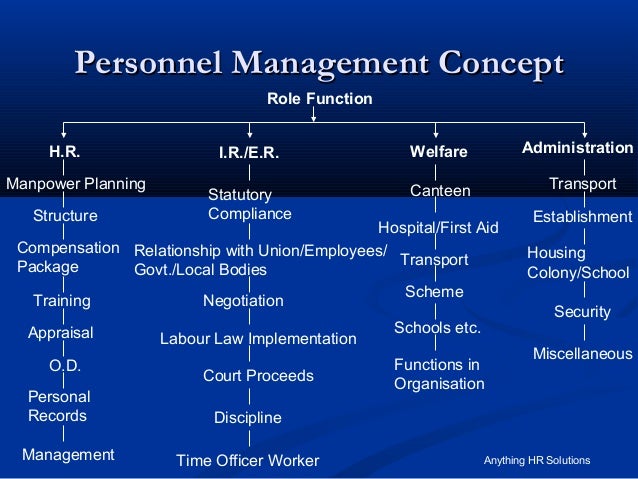
Personnel Management

An essential activity for the success of a company.

Personnel management is a mission that concerns all companies.

Resultado de imagem para Personnel management


Personnel management: definition


It consists:

* the recruitment;

* the compensation;

* the personnel evaluation;

* the passage of annual appraisal interviews;

* the job and skills forecasting.

Personnel management is not universal. Each company must take into account its needs and its sector of activity in order to establish a good personnel management.

Managing personnel is:

* recruit the right people in the right job;

* and make them evolve;

* with the aim of achieving success.

Importance of the environment in personnel management


The management of personnel implies a good knowledge of the external factors. Indeed, the latter directly impact the work of employees.

These external factors are:

* demographics;

* new directives on labor law;

* social developments;

* news in general.

Moreover, personnel management does not only involve employees. Indeed, it takes account of:

* shareholders, owners;

* clients;

* suppliers, subcontractors, distributors;

* all persons connected with the company.

Issues in personnel management


Ensure work is done

Personnel management is the organization of human resources to ensure the execution of all tasks.

To ensure that the work is done correctly and on time, it is necessary to:

* well recruit;

* train staff;

* ensure their productivity;

* control the work;

* correct, to thank, to motivate and sometimes to sanction.

Continuously improving working conditions

Personnel management also means ensuring that employees work in good conditions. 

Personnel responsible for managing the staff should ensure:

* safety of employees;

* their evolution;

* improvement of working conditions;

* compliance with the various agreements relating to labor law.